
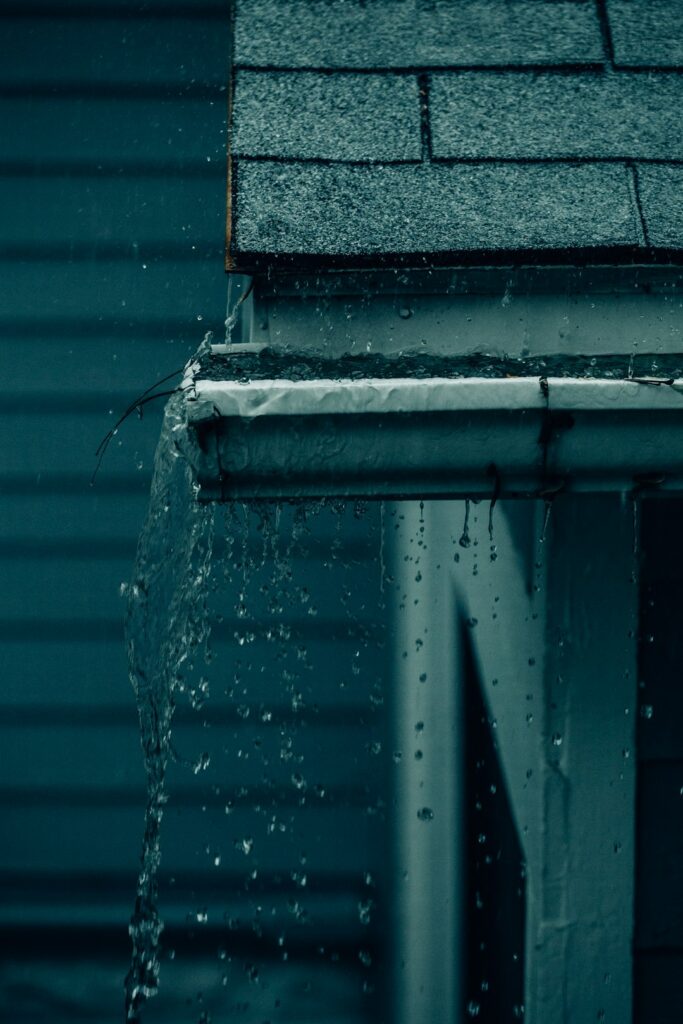
What do gutters actually do for a roof?
Gutters collect rainwater and melting snow as they leave the roof, then direct that water through downspouts and away from the house. This simple drainage system helps protect roof edges, exterior walls, windows, siding, soil, and the foundation.
A roof sheds a surprising amount of water during a storm. Without gutters, water can fall in concentrated streams along the eaves. Over time, those streams may erode soil, splash against siding, soak fascia boards, and collect near the foundation. Gutters do not make a roof watertight by themselves, but they help prevent water from reaching vulnerable areas around the roof perimeter.
For homes in Waterloo, seasonal rain, freeze-thaw cycles, wind, falling leaves, and winter snow all affect how well the drainage system performs.
Can clogged gutters damage a roof?
Yes. A clogged gutter can hold water against the roof edge and fascia instead of allowing it to drain away. The extra moisture may contribute to wood deterioration, peeling paint, stained soffits, and weakened gutter attachments.
Water can also overflow backward toward the roof edge. If the drip edge, fascia, or roof decking stays wet repeatedly, deterioration may develop gradually and remain hidden until stains, sagging, or soft wood become visible.
Common causes of gutter blockage include:
- Leaves and small branches
- Shingle granules
- Pine needles and seed pods
- Mud and organic debris
- Ice buildup
- Bird nests or other obstructions near downspout openings
A gutter does not need to be completely full to create a problem. Even a partial blockage can slow drainage enough to cause overflow during a heavy rain.
How do gutters affect roof shingles and the roof edge?
Gutters support the roof drainage system at the point where shingles, flashing, and the roof edge meet. When water is properly directed into the gutter, it is less likely to run behind the fascia or down the side of the building.
Poor drainage can expose the roof edge to repeated wetting. This is especially concerning where the roof’s edge materials are older, where flashing is loose, or where wind has lifted portions of the shingles.
Gutters can also become a problem if they are pulling away from the house. Sagging sections may change the slope of the gutter, leaving water trapped in low spots. Loose hangers can place stress on the fascia and may allow the gutter to shift during snow, ice, or strong wind.
The goal is not simply to have gutters attached to the roof. They need to be securely supported, correctly sloped, and able to move water toward open downspouts.
Do gutters cause ice dams?
Gutters generally do not cause ice dams, although they can become involved in the damage. Ice dams usually form when heat escapes through the upper part of a roof, melts snow, and sends water toward a colder roof edge. That water may freeze before it can drain away.
The resulting ridge of ice can block meltwater. Water may then move beneath shingles or into roof-edge materials.
A blocked gutter can make winter drainage worse, but cleaning the gutters alone does not correct the heat-loss or ventilation problem that often contributes to ice dams. Large icicles, recurring water stains near exterior walls, or ice forming along the eaves are signs that the roof, attic insulation, ventilation, and drainage system may need to be considered together.
During icy conditions, climbing a ladder or standing beneath heavy icicles is hazardous. Roof snow and ice can also slide unexpectedly, pull on gutter sections, or damage the roof edge.
Where should downspouts discharge water?
Downspouts should release water far enough away from the foundation that it does not collect beside the house. The exact arrangement depends on the property’s slope, soil, landscaping, walkways, and drainage features.
A downspout that ends directly beside the foundation may send a large volume of water into the soil next to the basement or crawl space. This can contribute to dampness, erosion, settlement, or seepage.
Look for these warning signs after heavy rain:
- Water pooling near the foundation
- Mud or washed-out soil below a downspout
- Basement dampness near exterior walls
- Water staining on siding
- A downspout extension that has shifted or disconnected
- Repeatedly wet ground below one section of roof
Extensions should remain securely connected and should not discharge onto a walkway, neighboring property, or area where water can freeze into a slipping hazard.
How often should gutters be checked?
Gutters should be checked at least twice a year and after major storms. In areas with mature trees, more frequent inspections may be needed, particularly during periods of heavy leaf fall.
A practical seasonal schedule includes:
- Spring: Check for winter damage, loose hangers, separated seams, and blocked downspouts.
- Summer: Watch for overflowing gutters during intense thunderstorms and inspect areas beneath roof valleys.
- Autumn: Remove leaves and debris before freeze-up.
- Winter: Observe icicles, ice buildup, sagging sections, and water stains without climbing onto icy surfaces.

A visual check from the ground can reveal many problems. Look for gutters that sag, tilt, separate, or overflow in one location. Water marks beneath the gutter line may indicate leaks or poor drainage.
Are gutter guards enough to prevent problems?
Gutter guards can reduce the amount of leaves and larger debris entering a gutter, but they do not eliminate maintenance. Fine material can collect on top of some guards, and small debris may still reach the gutter. Snow, ice, wind-driven debris, and roof granules can also affect performance.
Gutter guards do not correct:
- An improperly sloped gutter
- A damaged fascia board
- A disconnected downspout
- A roof leak
- Poor attic insulation or ventilation
- Water discharged too close to the foundation
They should be viewed as part of a drainage system, not as a substitute for inspection.
What roof warning signs should residents watch for?
Gutter problems often show up first as exterior clues. The following signs deserve attention:
- Peeling paint or staining beneath the eaves
- Soft or discolored fascia and soffits
- Shingles that appear lifted near the roof edge
- Water marks on exterior walls
- Rusted or separated gutter seams
- Gutters pulling away from the roofline
- Repeated ice buildup in the same location
- Basement dampness after rain
- Excessive granules collecting in gutters
A single overflow during an unusually intense storm does not always indicate major roof damage. Repeated overflow, however, suggests that the gutter slope, capacity, downspout arrangement, or roof drainage pattern should be evaluated.
Why gutter care is part of roof maintenance
Roof maintenance is not limited to inspecting shingles. Water must also leave the roof in a controlled way. Gutters and downspouts help manage that flow and reduce moisture exposure at the roof edge and around the house.
For local households, the most useful habit is to treat roof drainage as a connected system: shingles, flashing, drip edge, fascia, gutters, downspouts, soil, and foundation drainage all influence one another. Keeping that system clear and observing how it performs during rain and snow can reveal small problems before they become interior leaks or structural repairs.
